







Breaking a bone is shocking, physically and emotionally. Although visiting a nearby general clinic or the ER may feel like the fastest solution, the care you receive in those first moments can significantly impact your recovery. Let’s explore how starting with specialized expertise helps ensure accurate diagnosis and proper treatment from day one.
Precision Diagnosis Beyond the Initial X-Ray
A general practitioner is a vital asset for overall health, but orthopedic surgeons possess a refined eye for the nuances of musculoskeletal trauma. Not all fractures are straightforward breaks. Stress fractures, hairline fractures, and intra-articular injuries involving the joints require a level of diagnostic sophistication that standard urgent care settings often lack.
When you see an orthopedic surgeon first, you benefit from:
- Advanced Imaging Interpretation: Surgeons are trained to spot subtle instabilities that might be missed by generalists.
- Immediate Assessment of Soft Tissue: We evaluate the surrounding ligaments, tendons, and nerves that are frequently damaged alongside the bone.
- Accurate Prognosis: You receive a realistic timeline for healing based on the specific biomechanics of your injury.
Avoiding the Complications of Mismanaged Healing
The greatest risk of a "wait and see" approach is malunion, where a bone heals in an improper alignment. Correcting a poorly set bone often requires invasive corrective surgery later on. By consulting an orthopedic surgeon immediately, you bypass the cycle of temporary fixes. We apply definitive stabilization techniques from day one, whether that involves sophisticated casting or minimally invasive internal fixation. This proactive stance significantly reduces the risk of long-term stiffness or chronic discomfort.
Streamlining Your Path to Full Mobility
Efficiency is the hallmark of specialized orthopedic care. We don't just set the bone; we coordinate your entire rehabilitation strategy. This includes specific physical therapy protocols designed to maintain muscle tone and joint flexibility while the fracture site heals.
General clinics often provide a generic splint and a referral, adding days or weeks of delay to your recovery. Eliminating these middle steps allows you to begin the biological healing process under the supervision of the person who best understands the architecture of your skeletal system.
Specialized Care for Complex Fractures
Certain areas of the body, such as the wrist, ankle, and hip, are incredibly complex. These regions involve intricate networks of small bones and cartilage that must be aligned perfectly to preserve function. An orthopedic surgeon prioritizes the restoration of your range of motion, not just the closing of a gap in the bone. We utilize the latest technology and surgical techniques to ensure that once the bone is mended, your quality of life returns to its peak. Contact our office to obtain the targeted care you deserve.
Frequently Asked Questions (FAQs)
Should I always see an orthopedic surgeon first for a broken bone?
If you suspect a fracture, especially after a fall, sports injury, or significant trauma, early evaluation by an orthopedic specialist can help ensure accurate diagnosis and proper alignment from the start. This may reduce the risk of complications and support a smoother recovery.
How do I know if my injury might be a fracture?
Common signs include severe pain, swelling, bruising, visible deformity, inability to bear weight or move the limb, and tenderness at a specific point. Even mild symptoms can indicate a stress or hairline fracture, so medical evaluation is important.
Can a fracture heal incorrectly if not treated properly?
Yes. Improper alignment during healing, called malunion, can lead to long-term pain, stiffness, weakness, or limited motion. Early stabilization and monitoring by an orthopedic specialist helps reduce this risk.
Will I always need surgery for a broken bone?
Not necessarily. Many fractures heal well with casting, bracing, or splinting. Surgery is typically recommended only when bones are displaced, unstable, involve a joint surface, or are unlikely to heal correctly without fixation.
Why is imaging beyond a basic X-ray sometimes needed?
Certain fractures, joint injuries, or soft-tissue damage may not be clearly visible on standard X-rays. Advanced imaging, such as CT scans or MRI, can provide more detailed information to guide precise treatment planning.
How long does it take for a broken bone to heal?
Healing time varies based on the bone involved, fracture severity, age, and overall health. Many fractures begin to mend within several weeks, but full strength and function may take a few months, especially if rehabilitation is required.
What role does physical therapy play after a fracture?
Physical therapy helps restore strength, flexibility, balance, and range of motion once the bone is stable. Guided rehabilitation is essential for preventing stiffness and safely returning to normal activities.
When should I seek immediate medical attention?
Seek urgent care if you notice severe deformity, numbness, loss of circulation, uncontrolled pain, or an open wound near the fracture site. Prompt treatment is critical to protect long-term function and overall recovery.
Hear From Our Patients
Experiencing a broken bone can be overwhelming, and choosing where to seek care in those first critical moments is an important decision. Hearing from patients who began their treatment with specialized orthopedic evaluation can provide reassurance and clarity during a stressful time.
We invite you to explore our patient testimonials to better understand how prompt orthopedic expertise can make a meaningful difference in recovery and overall quality of life.
Reference Links:
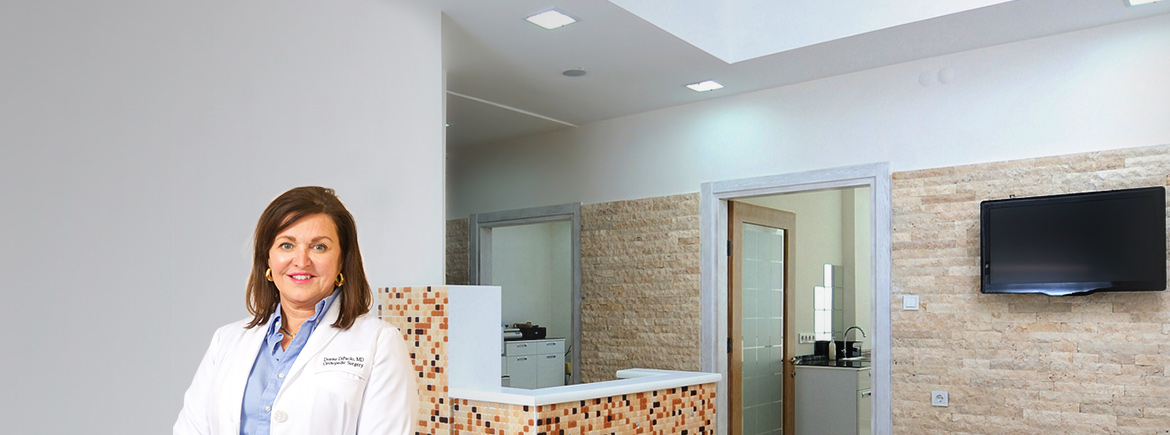
AUTHOR: Daneca DiPaolo, MD, FAAOS, FACS - Orthopedic Surgeon
Daneca DiPaolo, MD, FAAOS, FACS, is a highly-skilled, board-certified orthopedic surgeon located in Grenada, Mississippi. She offers the latest orthopedic techniques at and provides quality, compassionate, state-of-the-art orthopedic care.
Credentials & Recognition
Dr. DiPaolo earned her Doctor of Medicine and completed rigorous orthopedic surgery residency training. She is board certified in orthopedic surgery and a Fellow of the American College of Surgeons (FACS), a distinction recognizing professional excellence, surgical competence, and commitment to high standards of patient care. Dr. DiPaolo earned her undergraduate degree in biochemistry from Rutgers College in New Jersey before completing her medical degree at the University of Medicine and Dentistry of New Jersey. She remained there to complete her internship in general surgery and orthopedic surgery residency, followed by advanced fellowship training in hand and upper extremity surgery at the Hospital for Special Surgery, Cornell Medical College, consistently ranked the nation’s leading hospital for orthopedics.
Clinical Expertise
Dr. DiPaolo specializes in disorders of the hand and upper extremity, including fracture care, nerve compression syndromes, tendon and ligament injuries, and complex traumatic conditions. Fellowship-trained at the Hospital for Special Surgery, she brings advanced surgical precision and evidence-based techniques to both acute injuries and chronic degenerative conditions affecting the wrist, elbow, and hand. In addition to her operative expertise, Dr. DiPaolo plays an active role in orthopedic trauma coverage and post-operative rehabilitation coordination, supporting comprehensive recovery from injury through functional restoration. Her patient-centered approach emphasizes thoughtful surgical decision-making, effective pain control, and individualized rehabilitation strategies designed to restore mobility, strength, and long-term quality of life.
Medical Disclaimer: This information is for educational purposes only and does not constitute medical advice. For diagnosis and treatment recommendations, please consult with Dr. DiPaolo or another qualified orthopedic specialist at UMMC Grenada Pediatric Clinic.