






Most parents associate arthritis with aging joints and older adults, which is why juvenile arthritis is so frequently overlooked until it has been present for months. July is Juvenile Arthritis Awareness Month, and the statistics are more significant than most families realize: nearly 300,000 children in the United States are currently living with some form of juvenile arthritis. Understanding the signs, the types, and the treatment options available is what this post is about.
What Is Juvenile Arthritis and How Is It Different From Adult Arthritis?
Juvenile arthritis (JA) is not a single disease but an umbrella term covering several autoimmune and inflammatory conditions that cause joint pain, swelling, and stiffness in children under the age of 16. Unlike osteoarthritis, which most adults develop from wear and tear over time, juvenile arthritis is driven by an immune system malfunction in which the body attacks its own joint tissue, producing chronic inflammation that can damage cartilage, bone, and surrounding structures if not identified and managed early.
Signs and Symptoms Parents Should Not Dismiss
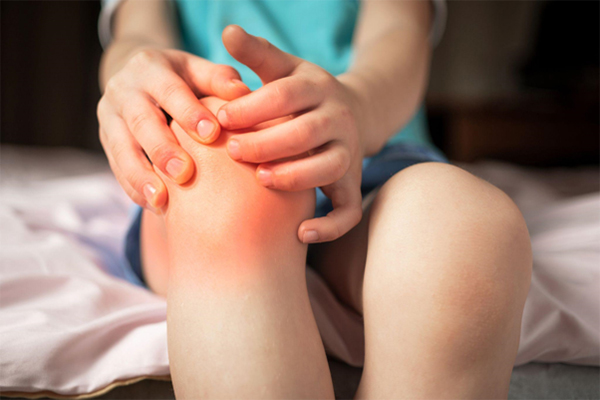
Juvenile arthritis rarely announces itself the way adult arthritis does. Children may not have the vocabulary to describe joint pain accurately, and parents often attribute early symptoms to growing pains or sports injuries. The warning signs that warrant a formal evaluation include persistent joint swelling lasting more than six weeks, morning stiffness that takes 30 or more minutes to resolve, a limp or change in gait that appears without a clear injury, visible warmth or redness over a joint, fatigue disproportionate to the child's activity level, and a reluctance to participate in physical activities that were previously enjoyed.
Importantly, juvenile arthritis symptoms frequently fluctuate. A child may appear to improve for weeks before experiencing a flare, which can lead families to delay seeking evaluation under the assumption that the problem has resolved.
How Juvenile Arthritis Is Diagnosed
Diagnosis requires a combination of clinical examination, laboratory testing, and imaging. Blood tests including antinuclear antibody (ANA), rheumatoid factor (RF), and inflammatory markers such as ESR and CRP help support the diagnosis, though many children with JIA test negative on standard panels. X-rays assess bony changes, while MRI provides more detailed evaluation of soft tissue, cartilage, and early joint changes that may not yet be visible on plain imaging.
Because no single test confirms juvenile arthritis, diagnosis is made by a specialist who can correlate the full clinical picture, including symptom duration, joint involvement pattern, and laboratory findings. Early referral to an orthopedic specialist or rheumatologist is strongly recommended when symptoms persist beyond six weeks.
Treatment and What It Means for Your Child's Long-Term Joint Health
Treatment goals in juvenile arthritis center on controlling inflammation, protecting joint integrity, preserving function, and maintaining the child's quality of life and participation in age-appropriate activities. Non-surgical management is the foundation of JA treatment and typically involves nonsteroidal anti-inflammatory drugs (NSAIDs), disease-modifying antirheumatic drugs (DMARDs), biologic agents, physical and occupational therapy, and joint injections.
Physical and occupational therapy play a particularly important role in children by maintaining joint range of motion, building the muscular support around inflamed joints, and equipping the child with adaptive strategies for daily tasks that joint pain makes difficult. Custom splinting and orthotics can also protect specific joints during periods of active inflammation.
When joint damage progresses despite medical management, orthopedic intervention may become necessary to address specific structural consequences of the disease. Persistent joint effusions may require aspiration or corticosteroid injection. In more advanced cases, surgical options including synovectomy or, in skeletally mature adolescents, joint reconstruction may be considered. An orthopedic evaluation ensures that any surgical planning accounts for the child's remaining growth and developmental stage.
If your child is showing signs of joint pain, swelling, or stiffness that has not resolved, contact our office to schedule an evaluation. Early diagnosis and a coordinated treatment plan give children with juvenile arthritis the best possible opportunity to protect their joints and maintain an active, full life.
Frequently Asked Questions: Juvenile Arthritis
1. Is juvenile arthritis the same as rheumatoid arthritis?
Juvenile Idiopathic Arthritis (JIA) and adult rheumatoid arthritis share some similarities in their autoimmune mechanism, but they are distinct conditions. JIA encompasses several subtypes with different clinical presentations and outcomes, and many children with JIA experience remission in adulthood, which is less common with adult rheumatoid arthritis.
2. Can juvenile arthritis be cured?
There is currently no cure for juvenile arthritis, but many children achieve remission with appropriate treatment, during which symptoms are absent or minimal. A significant proportion of children with oligoarticular JIA, the most common subtype, go into long-term remission with treatment.
3. Does juvenile arthritis affect only the joints?
Not always. Systemic JIA can affect the entire body, producing fever, rash, and inflammation around the heart and lungs alongside joint involvement. Some forms of JIA are also associated with uveitis, an inflammatory eye condition that can progress silently and cause vision damage without regular ophthalmologic screening.
4. Will my child need to stop all physical activity?
Physical activity is strongly encouraged in children with juvenile arthritis, with modification during active flares. Remaining active helps preserve joint mobility, build muscle strength, and support overall physical and emotional health. Low-impact activities such as swimming and cycling are particularly well-tolerated during periods of increased joint symptoms.
5. Is juvenile arthritis hereditary?
There is a genetic component to JIA, but it is not a straightforward inherited condition. Having a family member with an autoimmune condition modestly increases the risk, but most children with JIA have no family history of the disease. Environmental triggers are believed to play a role in activating the immune response in genetically susceptible individuals.
Reference Links:
- Juvenile idiopathic arthritis (JIA)- Mayo Clinic
- Juvenile Idiopathic Arthritis (JIA) - Nemours TeensHealth
- Arthritis Foundation Releases its First-Ever Report on Juvenile Arthritis - Arthritis Foundation
AUTHOR: Daneca DiPaolo, MD, FAAOS, FACS - Orthopedic Surgeon
Daneca DiPaolo, MD, FAAOS, FACS, is a highly-skilled, board-certified orthopedic surgeon located in Grenada, Mississippi. She offers the latest orthopedic techniques at and provides quality, compassionate, state-of-the-art orthopedic care.
Credentials & Recognition
Dr. DiPaolo earned her Doctor of Medicine and completed rigorous orthopedic surgery residency training. She is board certified in orthopedic surgery and a Fellow of the American College of Surgeons (FACS), a distinction recognizing professional excellence, surgical competence, and commitment to high standards of patient care. Dr. DiPaolo earned her undergraduate degree in biochemistry from Rutgers College in New Jersey before completing her medical degree at the University of Medicine and Dentistry of New Jersey. She remained there to complete her internship in general surgery and orthopedic surgery residency, followed by advanced fellowship training in hand and upper extremity surgery at the Hospital for Special Surgery, Cornell Medical College, consistently ranked the nation’s leading hospital for orthopedics.
Clinical Expertise
Dr. DiPaolo specializes in disorders of the hand and upper extremity, including fracture care, nerve compression syndromes, tendon and ligament injuries, and complex traumatic conditions. Fellowship-trained at the Hospital for Special Surgery, she brings advanced surgical precision and evidence-based techniques to both acute injuries and chronic degenerative conditions affecting the wrist, elbow, and hand. In addition to her operative expertise, Dr. DiPaolo plays an active role in orthopedic trauma coverage and post-operative rehabilitation coordination, supporting comprehensive recovery from injury through functional restoration. Her patient-centered approach emphasizes thoughtful surgical decision-making, effective pain control, and individualized rehabilitation strategies designed to restore mobility, strength, and long-term quality of life.
Medical Disclaimer: This information is for educational purposes only and does not constitute medical advice. For diagnosis and treatment recommendations, please consult with Dr. DiPaolo or another qualified orthopedic specialist at UMMC Grenada Pediatric Clinic.