




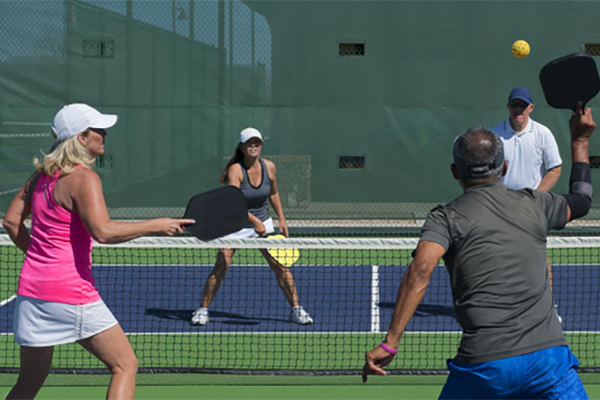
Pickleball is now the fastest-growing sport in America, with over 36 million players and court bookings that have tripled in the past three years. Its appeal is obvious: low barrier to entry, social atmosphere, and enough competitive intensity to keep players hooked. But that explosive growth has brought a parallel surge in orthopedic injuries that most players never see coming until they are sidelined.
Why Pickleball Players Get Hurt More Than They Expect
Players who have not competed athletically in years dive back into lateral movement, explosive volleys, and quick direction changes without the conditioning base those movements require. The court is small, but the demand on the knee, hip, shoulder, and elbow is significant. The sport feels accessible, and that accessibility is precisely what makes it dangerous.
Age compounds the risk. The average pickleball player is over 50, and soft tissue elasticity, muscle recovery capacity, and joint resilience all decline with age. A sport that feels gentle in the first hour can produce a meniscus tear, a rotator cuff injury, or a hip strain from a single misstep by the second.
The Most Common Pickleball Injuries Orthopedic Surgeons Are Seeing
Elbow tendinopathy tops the list. The repetitive wrist snap of the pickleball stroke overloads the lateral elbow tendons in a pattern nearly identical to tennis elbow, producing pain that starts after play and eventually becomes present throughout it. Medial elbow pain from the follow-through motion is equally common and equally underreported.
Knee injuries are the second most frequent category, ranging from patellar tendinitis driven by repeated lunging to meniscus tears and ACL injuries from pivoting on a planted foot. Players with pre-existing cartilage wear are particularly vulnerable to rapid symptom escalation from the sport's stop-start movement pattern.
Shoulder injuries, particularly rotator cuff strains and labral irritation, develop from the overhead reach and overhead serve mechanics. These injuries often present as a dull ache that worsens with overhead activity and disrupts sleep over time. Left unaddressed, partial rotator cuff tears can progress to full-thickness tears requiring significantly more complex reconstruction.
Hip injuries are among the most overlooked in the pickleball population. The constant lateral shuffling, low squat positioning at the kitchen line, and rapid directional changes place sustained rotational stress on the hip joint. Hip flexor strains, labral irritation, and femoroacetabular impingement (FAI) are all increasingly reported in active pickleball players, particularly those over 45.
Wrist fractures from falls are disproportionately common in the pickleball population, largely because older players instinctively extend their hand to catch themselves, transmitting the full impact load to the distal radius.
How to Reduce Pickleball Injury Risk Without Leaving the Court
Warm-up matters more in this sport than players typically invest in. Five to ten minutes of dynamic lower extremity and shoulder mobility work before play meaningfully reduces the injury risk of the first hard movement.
Proper paddle grip technique and appropriate paddle weight are underappreciated factors in elbow health. A grip that is too small or a paddle that is too heavy increases forearm muscle fatigue and accelerates tendon overload.
Conditioning off the court is the most effective long-term injury prevention strategy. Strengthening the rotator cuff, quadriceps, and hip stabilizers directly reduces the structural load placed on joints during play.
When to Seek Orthopedic Evaluation
Soreness that resolves within 24 hours after play is expected. Pain that persists beyond 48 hours, swelling in a joint, mechanical catching or locking, or any loss of range of motion warrants a formal evaluation rather than continued play.
Orthopedic conditions caught early consistently respond better to conservative treatment options, including injection therapy, structured physical therapy, and biologic treatments such as PRP, than those that are managed with rest and delayed evaluation for months.
Frequently Asked Questions
1. Is pickleball harder on your joints than tennis?
The smaller court reduces running distance, but the rapid lateral movements, frequent stopping, and overhead mechanics place comparable stress on the knee, hip, shoulder, and elbow, particularly for players over 50.
2. How do I know if my elbow pain is tennis elbow from pickleball?
The hallmark sign is pain on the outer elbow that worsens when gripping, lifting, or following through on a stroke. If it persists beyond two weeks of rest, a formal orthopedic evaluation is recommended.
3. What is the most serious pickleball injury?
ACL tears and full-thickness rotator cuff tears carry the longest recovery timelines and the most significant functional consequences, often requiring surgery and several months of structured rehabilitation.
4. Are pickleball injuries more common in beginners or experienced players?
Both groups are at risk, but for different reasons. Beginners lack sport-specific conditioning; experienced players often overtrain or underestimate cumulative joint load across multiple sessions per week.
Reference Links:
- Why Pickleball Injuries Are So Common - Cleveland Clinic
- Increasing Incidence of Pickleball Injuries Presenting to US Emergency Departments: A 10-year Epidemiologic Analysis of Mechanisms and Trends - PubMed
AUTHOR: Daneca DiPaolo, MD, FAAOS, FACS - Orthopedic Surgeon
Daneca DiPaolo, MD, FAAOS, FACS, is a highly-skilled, board-certified orthopedic surgeon located in Grenada, Mississippi. She offers the latest orthopedic techniques at and provides quality, compassionate, state-of-the-art orthopedic care.
Credentials & Recognition
Dr. DiPaolo earned her Doctor of Medicine and completed rigorous orthopedic surgery residency training. She is board certified in orthopedic surgery and a Fellow of the American College of Surgeons (FACS), a distinction recognizing professional excellence, surgical competence, and commitment to high standards of patient care. Dr. DiPaolo earned her undergraduate degree in biochemistry from Rutgers College in New Jersey before completing her medical degree at the University of Medicine and Dentistry of New Jersey. She remained there to complete her internship in general surgery and orthopedic surgery residency, followed by advanced fellowship training in hand and upper extremity surgery at the Hospital for Special Surgery, Cornell Medical College, consistently ranked the nation’s leading hospital for orthopedics.
Clinical Expertise
Dr. DiPaolo specializes in disorders of the hand and upper extremity, including fracture care, nerve compression syndromes, tendon and ligament injuries, and complex traumatic conditions. Fellowship-trained at the Hospital for Special Surgery, she brings advanced surgical precision and evidence-based techniques to both acute injuries and chronic degenerative conditions affecting the wrist, elbow, and hand. In addition to her operative expertise, Dr. DiPaolo plays an active role in orthopedic trauma coverage and post-operative rehabilitation coordination, supporting comprehensive recovery from injury through functional restoration. Her patient-centered approach emphasizes thoughtful surgical decision-making, effective pain control, and individualized rehabilitation strategies designed to restore mobility, strength, and long-term quality of life.
Medical Disclaimer: This information is for educational purposes only and does not constitute medical advice. For diagnosis and treatment recommendations, please consult with Dr. DiPaolo or another qualified orthopedic specialist at UMMC Grenada Pediatric Clinic.